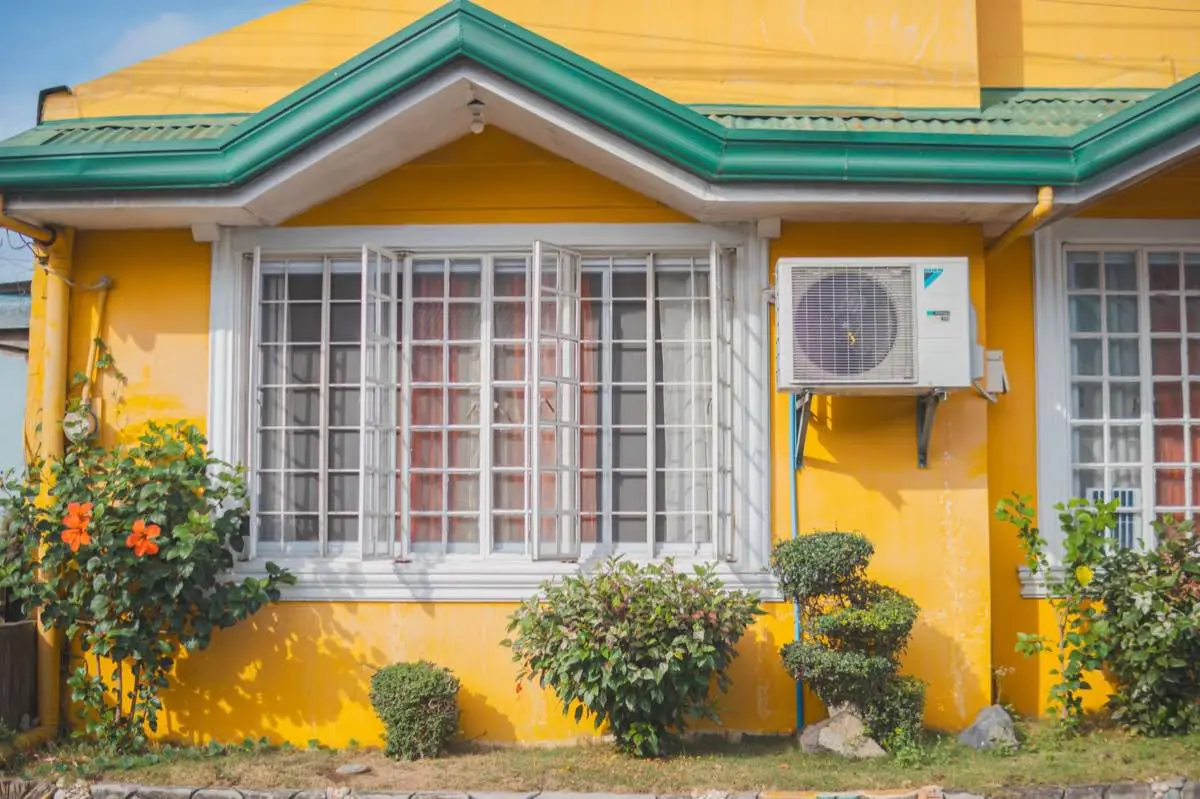
Energy efficient windows are worth it if you are replacing single-pane or failed windows, and hard to justify on energy savings alone if your current double-pane windows are still sound. The comfort improvement is immediate and real. The utility bill improvement is real and modest.
That is a less exciting answer than the one in the brochure, which is exactly why it is the useful one.
The label is the whole story
Every window carries an NFRC label with independently certified numbers. Learn four of them and you can shop without needing to trust anyone.
| Number | What it measures | What to look for |
|---|---|---|
| U-factor | Heat conducted through the whole assembly. Lower is better | Your zone's number, below |
| SHGC | Fraction of solar heat that gets through, 0 to 1 | 0.23 or lower in a hot climate |
| VT | Visible light transmitted | 0.40–0.60 is a reasonable balance |
| Air Leakage | Cubic feet per minute per square foot | 0.30 or lower; lower is better |
The mistake almost everyone makes is optimizing U-factor in a climate where SHGC is the number that matters.
In a hot, sunny climate, SHGC is king. Your problem is not heat conducting slowly through the frame in January. It is the sun putting direct radiant heat into the room every afternoon. A window with a great U-factor and a lazy SHGC will still bake a west-facing room.
In a genuinely cold climate, flip that. U-factor first, and a higher SHGC on south-facing glass is a free winter heater.
What ENERGY STAR actually requires now
This is where a lot of showroom material is quietly out of date. Version 7.0 of the ENERGY STAR specification for residential windows, doors and skylights took effect on 23 October 2023, and it is still the version in force. These are the window criteria, straight out of Table 1 of that specification:
| ENERGY STAR climate zone | U-factor | SHGC |
|---|---|---|
| Northern | ≤ 0.22 | ≥ 0.17 |
| North-Central | ≤ 0.25 | ≤ 0.40 |
| South-Central | ≤ 0.28 | ≤ 0.23 |
| Southern | ≤ 0.32 | ≤ 0.23 |
Air leakage has to come in at 0.3 cfm/ft² or lower in every zone. Source: ENERGY STAR Version 7.0 Residential Windows, Doors, and Skylights Final Specification, energystar.gov.
Two things in that table are worth a second look. Southern and South-Central both tightened to 0.23 SHGC, down from the 0.25 that circulated for the better part of a decade — so a hot-climate buyer shopping to 0.25 is shopping to a number that stopped qualifying in 2023.
And read the Northern row again. That SHGC is a floor, not a ceiling: cold-zone windows now have to let a minimum amount of solar heat in. The free winter heater is written into the specification. (Northern glass can also qualify on an alternate path, trading a slightly higher U-factor for a much higher SHGC, which is why two Northern-certified windows can read quite differently on the label.)
What California actually requires
Before any payback math, there is a floor your replacement has to clear, and it is not the same floor everywhere.
Title 24 Part 6 is California's own energy code, not an IECC edition, and the 2025 version took effect on 1 January 2026 across all sixteen climate zones. The prescriptive numbers are U-factor 0.30 and SHGC 0.23, but Section 150.2(b)1B gives replacements of 75 square feet or less of vertical glass an easier target: U-factor 0.40, and SHGC 0.35 in zones 2, 4 and 6 through 15. Leave the NFRC labels on for the inspector.
A number on a brochure is marketing. The number on the NFRC label is the one the code reads, and it is the one to compare between quotes.
What makes a window efficient
Low-E coating. A microscopically thin metallic oxide layer that reflects infrared while letting visible light through. Coatings come in single, double, and triple silver layers — more layers means more solar rejection and a slightly lower visible transmittance. This is the single largest performance lever, and it costs relatively little.
Gas fill. Argon between the panes conducts heat more slowly than air. Krypton performs slightly better in narrow cavities and costs more. Neither is exotic; argon is standard on most quality units.
Warm-edge spacer. The strip separating the panes at the perimeter. Old-style aluminum spacers conduct heat straight around the edge of your nice insulated glass, which is why old double-pane units sweat at the bottom edge first. A modern non-metallic or structural foam spacer fixes that.
The frame. Vinyl and fiberglass are far better insulators than aluminum. A thermally broken aluminum frame is acceptable; a plain aluminum frame in an extreme climate is a heat bridge with a window in it.
The payback math, done honestly
Say you spend $9,000 replacing 15 windows. Say it trims your annual heating and cooling bill by $200 to $400 — a plausible figure when you are replacing older but functional double-pane glass.
That is a 22 to 45 year payback, on windows with a service life in the 20 to 30 year range.
Now run it for single-pane aluminum windows in a hot climate. The savings are considerably larger, the comfort difference is dramatic, and the payback stops being absurd. Same product, completely different case.
So here is the opinion: if your current windows are sound double-pane, do not buy new ones for the energy savings. Put that money into attic insulation and air sealing, which return more per dollar than any window on the market. If your windows are single-pane, drafty, fogged, or failing, replacement is genuinely worth doing — and you should buy the efficient version, because the upgrade from a basic unit to a good low-E unit is a small fraction of the total cost.
Comfort is the real product
Energy modeling misses what people actually notice.
A single-pane west-facing window radiates heat at you like a warm wall. Sit two feet from it in July and you feel it, regardless of what the thermostat says. Replace it with low-E double pane and the surface temperature of the glass drops enough that the room becomes usable. That is not a line item on a utility bill. It is a room you get back.
The same applies in reverse in cold weather, where cold glass creates a draft that is not a draft at all — just air cooling against the pane and falling. People caulk for years chasing a leak that does not exist.
The upgrades that are not worth the money
Triple pane in a mild or hot climate. It adds cost, adds weight on the hardware, and solves a conduction problem you do not primarily have. It earns its keep in cold northern climates and rarely elsewhere.
Krypton fill on standard cavity widths. Argon does nearly the same job for much less.
Tinted glass instead of a proper low-E coating. Tint cuts visible light along with heat, so you get a darker room for less thermal benefit. A spectrally selective low-E coating rejects heat while keeping the room bright. That is the point of the technology.
Whole-house replacement when three windows are the problem. There is no rule requiring you to do all of them. Do the west and south exposures first if the budget is tight — that is where the heat gain is.
What to do before you spend anything
- Check your attic insulation depth. If it is thin, that is a cheaper and larger win than windows.
- Do the incense test around each window. Air moving at the trim means a caulking problem, not a glass problem.
- Look at which rooms are actually uncomfortable, and at what time of day. That tells you which exposures matter.
- Check for existing warranty coverage on any fogged units before paying for glass.
Reading a quote without getting played
Ask for the NFRC numbers per window, in writing, on the quote. Not the brochure's "up to" figures for the best product in the line — the numbers for the specific units in your specific openings.
Ask which low-E coating is specified. Ask whether the SHGC differs by elevation, because on a well-designed job it should — different coating on the west face than on the north face is a sign somebody is thinking.
And ask what happens at the flashing. The finest window in the world installed without proper sill flashing and a sealed perimeter will leak air and eventually water. Installation quality outweighs a few hundredths of U-factor every time.
Ontario Window Replacement installs energy-efficient windows, vinyl replacements, and patio sliding doors across Ontario and the West End of the Inland Empire, and we will happily tell you to insulate the attic first. For pricing, see our window cost breakdown or our repair versus replace guide.
Get a free quote → · call (844) 422-0623
Ready for a free quote in Ontario?
Ontario Window Replacement — free estimate, clear scope, no pressure. Use the form on this page or jump to the homepage quote.
Related services in Ontario
Ontario Window Replacement money pages — go straight to the service you need.
- Energy-Efficient Glass for Homes and Suites →
Energy-efficient glass pays back on a schedule, and the two buildings we work on keep opposite schedules. A house in Ontario sits empty at two in the afternoon and full at eight at night.
- Vinyl Window Replacement →
Vinyl is the correct answer for most houses in Ontario and the wrong answer for almost every storefront. That sentence is the whole page, but the reasons behind it decide whether you get a window that lasts thirty years or one that sags in eight.
- Sliding Patio Doors →
The patio slider is the heaviest moving thing in most Ontario houses and the one that gets used every day. When people say their door is broken, nine times out of ten the glass is fine and the rolling system underneath it has been dead for years.
- Fiberglass Window Replacement →
Fiberglass exists to solve three specific problems: dark colors at large sizes, thin sightlines on a wide opening, and a frame that will accept paint later. If none of those apply to your house, you are about to spend money for nothing.
- Clad-Wood Windows →
Clad-wood is the only window we sell for a reason that is not technical. You buy it because you want wood on the inside of the room, and everything else about the product is engineering built to make that survivable outdoors.
Frequently asked questions
Do energy efficient windows really lower your energy bill?
Yes, but less dramatically than the brochures suggest. Replacing single-pane glass with modern low-E double pane produces a real, noticeable difference. Replacing decent 15-year-old double pane with slightly better double pane usually does not pay back within any sane timeframe.
What is U-factor and what number should I look for?
U-factor measures how much heat conducts through the whole window assembly — lower is better, and it typically ranges from about 0.20 to 1.20. In a cold climate it is the number that matters most. What counts as good depends on where you live: ENERGY STAR Version 7.0 wants 0.22 or lower in the Northern zone and 0.32 or lower in the Southern one.
What is SHGC and why does it matter in a hot climate?
Solar heat gain coefficient is the fraction of solar heat that gets through, from 0 to 1. In a hot, sunny climate like the West End of the Inland Empire it matters more than U-factor. Look for 0.23 or lower on west and south exposures — the current ENERGY STAR threshold for the two southern zones, and the number that decides whether a room is usable in August.
Is triple pane worth it?
In a mild or hot climate, usually not. Triple pane adds cost and weight to solve a heat-conduction problem that a hot climate does not primarily have. In genuinely cold northern climates it earns its money. In the West End of the Inland Empire, a quality double pane with the right low-E coating is the honest value pick.
What does the ENERGY STAR label actually guarantee?
That the window met the criteria for your climate zone under whichever version of the specification was current on its date of manufacture. Version 7.0 has been in force since 23 October 2023. The thresholds differ by zone and get revised periodically, so check the current requirements rather than trusting a logo — a label earned in 2019 was earned against easier numbers. In southern zones the binding number is SHGC; in northern zones it is U-factor.
Are new windows the best way to lower my energy bill?
Usually not first. Attic insulation, air sealing, and duct sealing typically return more per dollar than windows do. If your attic is under-insulated, do that before you spend $10,000 on glass. Any honest window company will tell you the same thing.
Local context
How this applies in Ontario, CA
Every article here is written from window work done in Ontario and the West End of the Inland Empire, so the numbers reflect local labour, permit and material costs rather than a national average. Your own job can land either side of them depending on access, the condition of what is already there, and the materials you pick — center-set aluminum storefront framing in 1-3/4 by 4-1/2 inch profiles, dry-glazed EPDM gaskets and wet-glazed structural silicone joints, subsill flashing with end dams under storefront base members.
The way to turn any of this into a real answer is to have someone look at your actual situation. The free estimate is free, itemized and written down, with no deposit and no obligation. Call (844) 422-0623 or start on the Ontario Window Replacement homepage.
Areas Ontario Window Replacement covers
Ontario first, then the surrounding communities of the West End of the Inland Empire. Each has its own page with local detail rather than a copy of this one:
- Chino, CA — San Bernardino County, incorporated in 1910, population 91,403 at the 2020 census, with dairy-preserve land on the south side turning over to distribution buildings
- Chino Hills, CA — San Bernardino County, incorporated in 1991, population 78,411 at the 2020 census, almost entirely built after 1980 and overwhelmingly residential
- Montclair, CA — San Bernardino County, incorporated in 1956, population 37,865 at the 2020 census, in a five and a half square mile footprint dominated by retail frontage
- Upland, CA — San Bernardino County, incorporated in 1906, population 79,040 at the 2020 census, with a pre-war downtown core and hillside tracts above Foothill Boulevard
- Pomona, CA — Los Angeles County, incorporated in 1888, population 151,713 at the 2020 census, the largest city in the Pomona Valley and the oldest housing stock we cover
- Claremont, CA — Los Angeles County, incorporated in 1907, population 37,266 at the 2020 census, with a walkable village core and a large protected residential historic district
Or jump to the full list of Ontario services.
More from the Ontario Window Replacement blog
- How Much Do New Windows Cost? (Ontario, CA Guide)
New windows in Ontario, CA run about $400 to $900 per window installed for standard vinyl. Here's the cost by material, type, and size — no sales math.
- How Long Does Window Replacement Take in Ontario, CA?
How long window replacement takes in Ontario, CA — 30 to 60 minutes per window on install day, but weeks of lead time first.
- Window Fogging Between Panes in Ontario, CA: Fix It?
Fogging between window panes in Ontario, CA — why the seal failed, glass-only repair cost, and the warranty most people never claim.
The Ontario Window Replacement Team
window specialists serving Ontario, CA
Written by the Ontario Window Replacement team — insured window pros serving Ontario, CA and the surrounding area.